
With the Detroit Pistons’ 108–105 victory over the Phoenix Suns, the narrative that they can’t win without Cade Cunningham should be put to rest. There’s no denying Cunningham’s stardom—or the ceiling he gives this team—but this roster deserves recognition in its own right. The numbers back it up.
In the five games Cunningham has missed, the Pistons are 4–1. While their scoring dips slightly to 113 points per game from their season average of 118.3 , their defense has surged without him, allowing just 104.2 points per game—well below their mark of 112.09 with him . That swing speaks to a culture built on cohesion, accountability, and a true next-man-up mentality .
And the idea that Detroit can’t win without Cunningham isn’t the only narrative that deserves to be retired. There are a few more worth addressing—so let’s dive in.
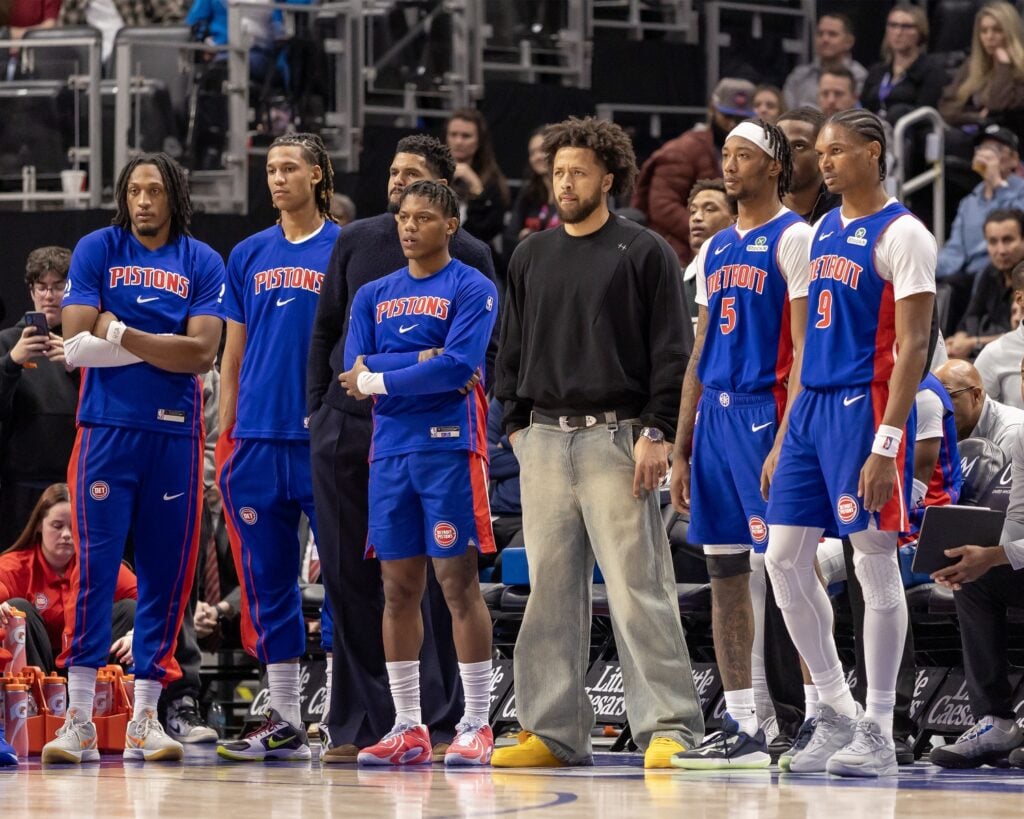
Time to Retire the Pistons Narrative About Winning Limitations
Pistons Defy Narrative, Prove Defense Can Carry Games
In Wednesday night’s win, the Pistons showed something that should reshape the narrative around this roster. It wasn’t a clean offensive performance—and it didn’t need to be. Defense carried them across the finish line once again.
The numbers support it. The Pistons rank fourth in opponents’ points per game (111.1), second in defensive rating (110.3), second in steals (10.4), and first in blocks (6.7). That profile belongs to a team that believes it can win regardless of pace, shooting variance, or circumstance.
Team Over Individual Stars
Offensive inconsistency naturally fuels another familiar narrative: the Pistons need a second star. But that assumption overlooks how this team has functioned all season. Rather than leaning on one clear-cut secondary option, Detroit has succeeded by spreading responsibility across the roster.
This is a young group with multiple players capable of filling that role on any given night. Jalen Duren has the physical tools and touch to command more offensive usage. Jaden Ivey continues to flash his downhill explosiveness as he works back into rhythm . Duncan Robinson has provided timely shooting bursts that can swing momentum. The production may vary, but the options are real.
That unpredictability is what makes the Pistons dangerous . Defenses can’t key in on a single release valve, and the collective buy-in on the defensive end remains intact. Chasing a big move simply to check the “second star” box risks disrupting that balance. For now, patience may be the smarter play—let this evolve before forcing a conclusion.
Pistons Force Contact, Not Chaos
The Pistons play a brand of basketball that dares opponents to match their physicality. But for teams not built that way, trying to mirror Detroit’s approach can quickly become a mistake. When physical teams meet resistance, escalation often follows. What begins as matching energy can turn into baiting through extra shoves, after-the-whistle contact, and emotional reactions.
Restraint matters, because physicality without discipline leads to fouls, technicals, and broken focus. Instead, the Pistons walked that line—bringing force without losing control—a sign of a team learning how to win ugly without beating itself, and one whose balance may ultimately define its ceiling.
The Last Word
At some point, the narratives about the Detroit Pistons need to stop. The idea that the Pistons can’t win without Cade Cunningham, that their style isn’t sustainable, or that they must rush into adding a second star ignores what’s been happening on the floor. This team has already shown it can compete—and win—through defense, discipline, and collective belief.
The Pistons don’t rely on perfect shooting nights or ideal circumstances to succeed. They win games by imposing physicality, staying connected defensively, and trusting the depth they’ve built. That approach isn’t accidental; it’s intentional. It’s the product of a roster that understands its identity and a culture that holds up under pressure.
Rick Osentoski-Imagn Images