
The Detroit Pistons didn’t stumble into championship contention — they’ve forced the league to reckon with them. At 43-14, they hold the best record in basketball. Their formula is unapologetic : physical defense, rim pressure, and relentless effort. Detroit ranks near the top of the league in defensive rating, steals, and blocks. When the game turns into a fight, they welcome it.
Championship basketball isn’t just about what you do well — it’s about what opponents can expose. And the Pistons’ three-point profile raises real questions. They rank near the bottom in makes, attempts, and efficiency. In a league built on spacing, that’s a gamble.
The playoffs don’t reward dominance. They punish limitations. Can the Pistons’ identity hold up when every possession is dissected? Let’s dive in.
Pistons Championship Contention Needs More Than Elite Defense
Shooting Shapes Pistons Championship Contention
The blueprint to beat the Pistons is simple: make them shoot. In their 14 losses, the Pistons are shooting just 28.8% from three (131-for-455). They’ve cleared 40% only once — a 48.6% night against the Utah Jazz. When the outside shots don’t fall, the offense tightens.
Opponents are already adjusting. They’re crowding the paint, building walls at the rim, and living with kick-outs. The message is clear: prove you can win from deep.
Duncan Robinson can stretch the floor. But in playoff basketball, one shooter isn’t enough. If the Pistons want their physical identity to translate into June, the spacing around him has to become respectable — not just occasional.
Controlling Chaos
Detroit’s defensive aggression is a weapon — but it’s also a risk. The Pistons average 15.3 turnovers per game, ranking 23rd in the league. At the same time, they force a league-best 17.3 turnovers from opponents. That high-variance style fuels their identity. It speeds games up. It creates chaos.
But chaos cuts both ways. In the playoffs, possessions shrink in value. Every empty trip matters. Live-ball turnovers turn into transition threes. Momentum shifts faster.
If the Pistons want their pressure to translate into championship contention, the gamble has to be controlled. Forcing mistakes is sustainable. Committing them isn’t.
Finding Stability Behind Cade
Every contender has a hierarchy. The ball belongs to Cade Cunningham — and deservedly so. He’s the engine, the closer, the superstar.
But playoff defenses don’t allow comfort. When Cunningham draws traps and late-game doubles, someone else has to finish possessions.
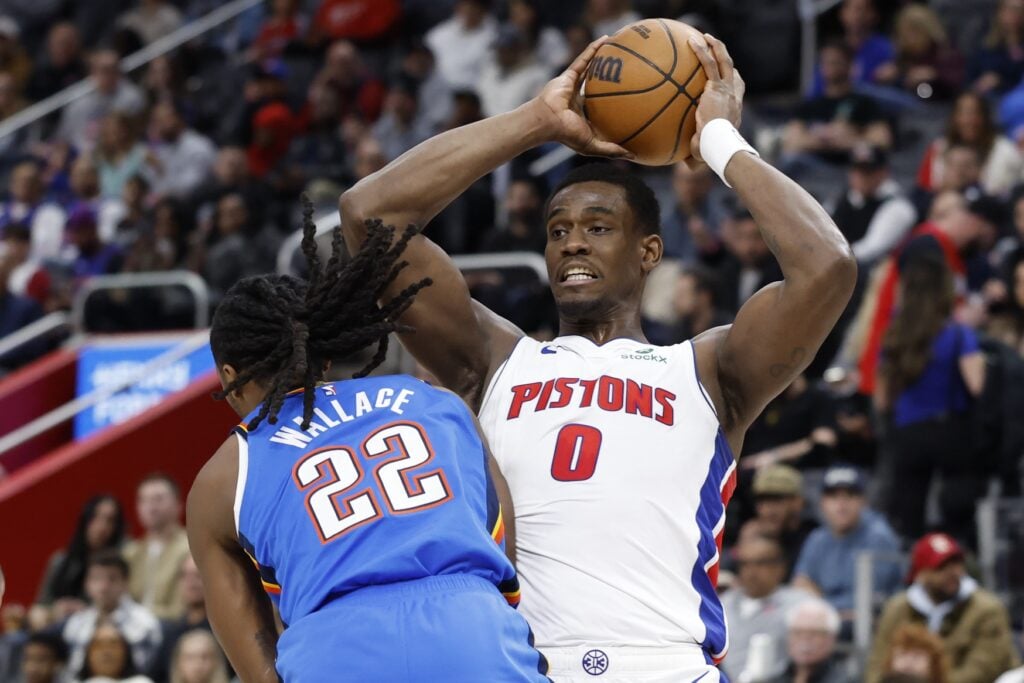
Over the last three games, Jalen Duren has looked ready for that responsibility. He’s averaging 26.7 points and 14 rebounds, overwhelming opponents with size, touch, and force.
The question isn’t whether Duren can dominate stretches — it’s whether that dominance scales into a seven-game series. If he becomes a reliable interior counterpunch, Detroit’s offensive ceiling rises dramatically. If not, the burden on Cunningham only grows heavier.
The Last Word
The Detroit Pistons don’t lack toughness. They don’t lack effort. And they don’t lack belief. What they lack — at least for now — is margin for error.
In the playoffs, every weakness gets isolated. Every flaw gets magnified. The three-point shooting must hold. The turnovers must tighten. The hierarchy behind Cade Cunningham must fully solidify.
Because in May, defense keeps you competitive. Balance wins you the championship.
Rick Osentoski-Imagn Images