No matter what, the Detroit Pistons are a band of brothers—willing to stand in the fire for one another. In a tightly contested 110-104 win over the Charlotte Hornets Monday night, Jalen Duren , Isaiah Stewart , Miles Bridges , and Moussa Diabaté were ejected following a fight that crystallized what this team believes about itself. After a situation had begun to de-escalate, Bridges took a swing at Duren, prompting Stewart to charge from the bench to defend his teammate.
Incidents like this aren’t accidents—they’re reflections. Over the last two seasons, the Pistons have built a culture rooted in physicality, resistance, and collective pride . They won’t back down, and they won’t apologize for playing a brand of basketball that evokes memories of Detroit teams defined by toughness and unity.
Reputation is earned—sometimes fairly, sometimes unfairly. The Pistons have earned theirs. The question now isn’t who they are, but whether this continuity and identity are enough to carry them out of the Eastern Conference. Let’s dive in.
Pistons Brothers Have Become the East’s Toughest Out
Big Brother Stew: Pistons Standard
The Pistons don’t come into games looking for action—but when it finds them, they don’t retreat. This is a team prepared to meet force with force, and that mindset starts with Stewart.
Ask a casual fan who doesn’t watch Detroit who Stewart is, and the answer is usually simple: the guy always looking for a fight. But Stewart isn’t searching for chaos. He’s responding to it. His edge is accountability—standing up for himself and his teammates when the line is crossed. In this league, showing weakness invites exploitation, and Stewart has made it clear that Detroit won’t be that team.
Strength in Numbers
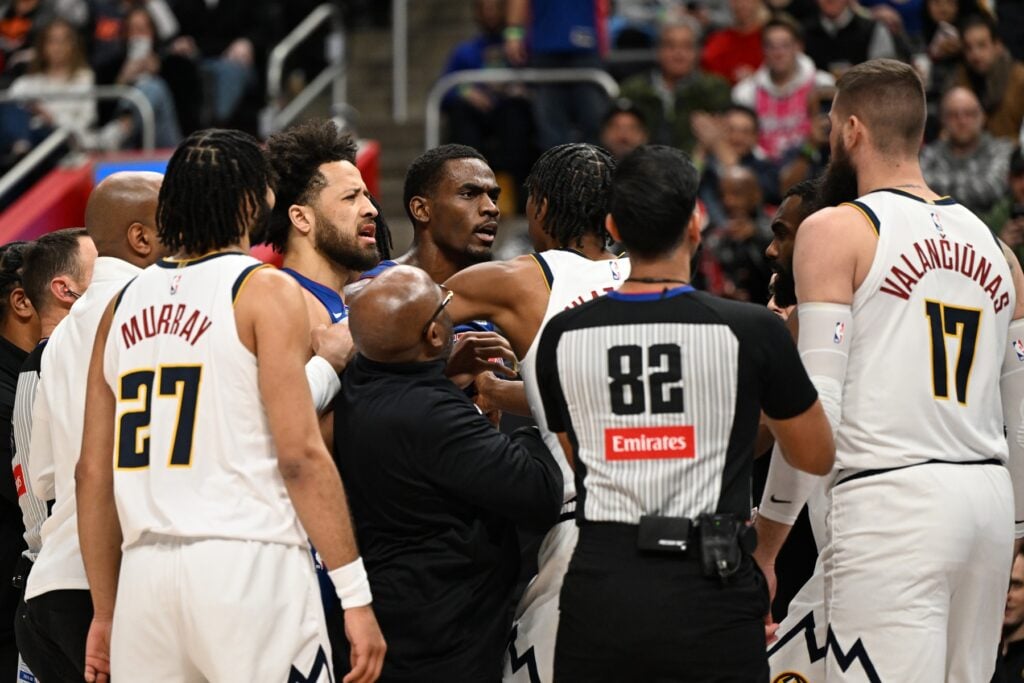
When things go down, eyes naturally turn to Stewart—but he isn’t alone. The Pistons have others who embrace confrontation, and it starts with Duren. Stoic and focused on proving his value, Duren goes about his business quietly, but he won’t hesitate to step in when lines are crossed. When Vince Williams tangled with Ausar Thompson , Duren was there. When Jonas Valančiūnas confronted Stewart, Duren stood his ground in defense of his Pistons brother.
Add Ron Holland —who has shown no fear mixing it up—to veterans like Paul Reed and Javonte Green , and the pattern becomes clear. This is a roster built to reflect the city it represents: tough, connected, and unyielding. And while the physical edge draws attention, it hasn’t come at the expense of execution. Beyond the confrontations, the Pistons are playing efficient, structured basketball—proof that their edge isn’t chaos, but identity.
No More Doubts
With their win over Charlotte, the Pistons are at 39 victories and have a chance to reach 40 against Toronto. All season, they’ve been labeled the story of the year —as if this rise came out of nowhere. It didn’t. This is simply the next step for a team that has moved from embracing its culture to fully accepting it.
No matter the circumstances, the Pistons compete. Down multiple starters. Missing key rotation pieces. Facing questions about sustainability. They keep winning. Without Cade Cunningham ? They’re 5–1 . Think the record is inflated by weak competition? They’re 16–6 against quality opponents. This isn’t a fluke—it’s a team that knows who it is, and wins because of it.
The Last Word
These Detroit Pistons brothers move as one. When pressure hits, they don’t scatter—they tighten ranks. Every hard foul, every confrontation, every moment of adversity is met with the same response: together. That bond isn’t manufactured or performative; it’s built through trust, sacrifice, and the understanding that no one is left to stand alone.
Being a band of brothers doesn’t guarantee a title, but it guarantees resilience. It creates a team that won’t fold when stars are missing, when narratives turn, or when games get uncomfortable. Detroit isn’t surviving on talent alone—it’s thriving on connection. And as the stakes rise, that unity becomes an advantage that can’t be schemed against or outmatched.
The Pistons aren’t just playing for wins anymore. They’re playing for each other. History shows that in Detroit, teams built that way are the ones that last.
Jim Dedmon-Imagn Images