
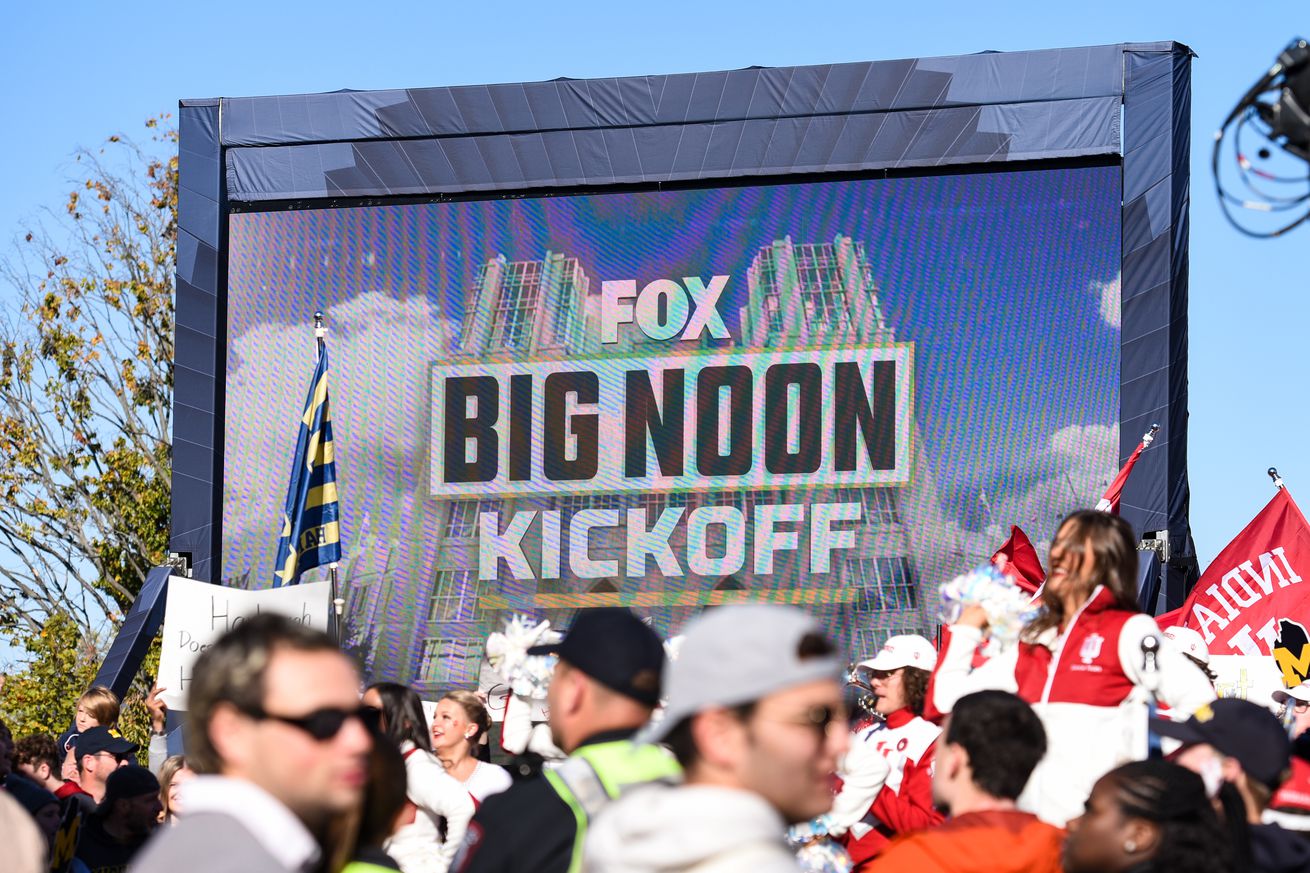
Big Noon Saturday, random night games, and Peacock are features, not bugs, of being arguably the nation’s premier college football conference:
The 2025 college football season will be the third year under the new mega Big Ten media deal, a revolutionary structure that is unmatched across the rest of the conferences. As a reminder, FOX, CBS and NBC all put games on their flagship networks, with additional contests occasionally airing on their auxiliary channels (and streaming services) as well.
FOX’s Big Noon Saturday has been the main source of controversy, while CBS’s 3:30 spot and NBC’s 7:30 window have not been immune from criticism. However, as we recently got the kickoff times to open the season , I am here to defend this creative broadcast approach which continues to push the Big Ten towards the top of the entire sport.
Brand recognition
Love it or hate it, everyone knows what Big Noon Saturday is at this point. While not always the week’s biggest Big Ten game, FOX is committed to airing a prominent matchup at the noon window whenever it can, giving fans a consistent anchor that stands alone across all networks. By year three, most Big Ten enthusiasts are also familiar with the CBS and NBC premier time slots, making it easy to know where to find the week’s most compelling matchups.
The branding may be silly (CBS’s Big Ten Time and NBC’s Big Ten Saturday Night are neither creative nor catchy), but the consistency is important. Given college football’s 13-day selection schedule, each network also gets to build up to the games with nearly two-weeks of marketing and advertising hype. Having three times the coverage is never a bad thing, and the Big Ten has been soaking that up.
Leaders and best
On a more personal level, Michigan itself has certainly benefited from this media deal. While that was also the case under ABC/ESPN/Disney, the Wolverines (and Ohio State) have really separated themselves from the pack. Over the first two years of this structure, 17 of Michigan’s 24 regular season games have been selected by one of the three main viewing windows, as all three networks love to prioritize the maize and blue in their draft choices .
Michigan continues to wield a lot of power in this media deal. While FOX has created a Friday night window, the Wolverines will not be a participant. There are still no night games late in the season either, making the concept of a Black Friday game at Ford Field quite laughable. The networks will always have Michigan near the top of their list each week, and in turn, Michigan has substantial authority.
Good to be wanted
While the SEC has racked up championships, and ESPN continues to lead sports media, the Big Ten may be catching up in both regards. Obviously, on-field performance has started to tilt, and FOX is quickly establishing itself as both a college sports player and a Big Ten cheerleader. Having CBS and NBC in lock-step helps ensure that no other conference can match the Big Ten’s hold on the largest broadcasters in the country.
It may feel irrelevant to the average football fan to drone on about media contracts, but their (potentially detrimental) impact cannot be ignored. Look at the conferences playing actual games on the CW or ESPN+. Think about how difficult it can be to even find some Power Four games at times. This will never happen to the Big Ten.
The financial aspect is even more significant. Even schools like Rutgers are making substantially more than most other programs, leading to upgraded staff and facility budgets which directly translates to better programs; the benefit of this can clearly be seen in Ann Arbor. So yes, multiple consecutive Big Noon Saturdays can be annoying (we have had them too, Buckeyes) and New Mexico at night feels unnecessary, but these are minor inconveniences to stay at the top of the college football landscape.