
With the proposed federal loan-limiting legislation raising concern among prospective PA students, Detroit Mercy’s College of Health Professions is working to evaluate potential impacts and reassure applicants. When asked how the program plans to respond if the “big, beautiful bill” passes, Dean Ahmed Radwan emphasized that the University is actively preparing.
“UDM is actively reviewing and assessing how the proposed legislation could impact graduate enrollment,” he explained.
Despite uncertainty, Radwan noted that the structure of Detroit Mercy’s program offers some protection.
“The positive news is that our PA program tuition is not too expensive, which helps minimize the gap,” he said.
While some students may still require private loans, Radwan highlighted that “the long-term return on investment as a practicing PA remains strong and continues to justify the expense.”
As healthcare changes rapidly, Detroit Mercy continues adapting its curriculum to match real-world needs. Radwan shared that the program “continually updates its curriculum to reflect current clinical demands, emerging practice standards, and feedback from employers and preceptors.” A major goal, he added, is “to graduate highly ethical, clinically competent medical professionals thoroughly prepared to deliver quality care and dedicated to serving diverse and underserved populations.”
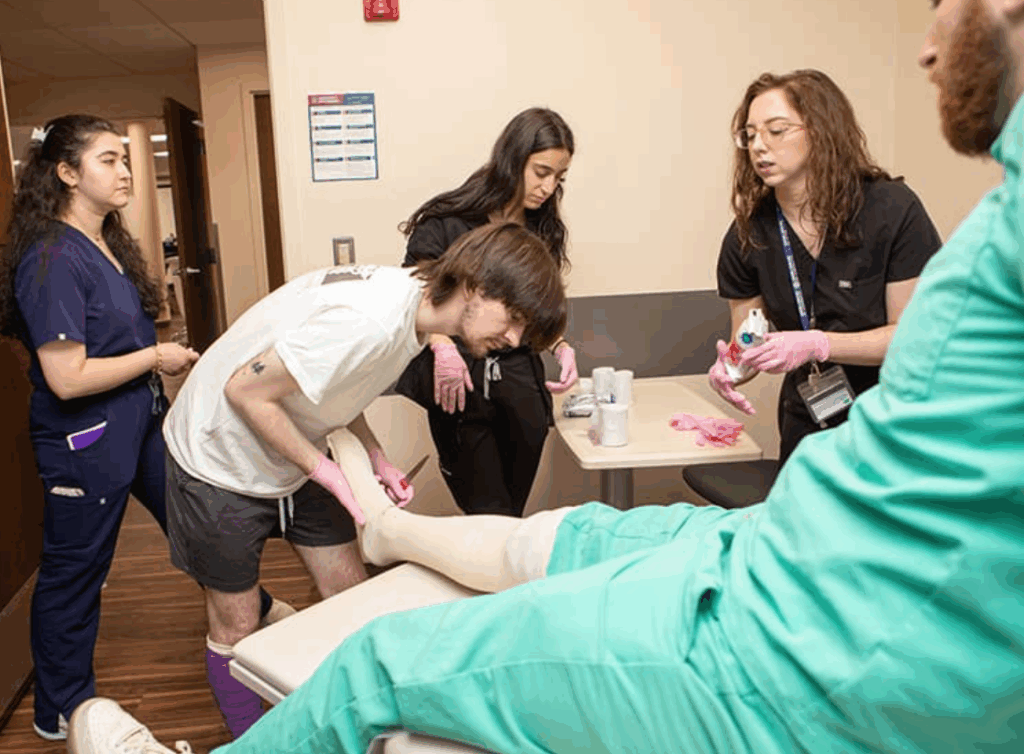
Recent curricular improvements include expanded point-of-care ultrasound training and the renovation of the Simulation Technology and Research (STAR) Center. Students now benefit from enhanced diagnostic and procedural training opportunities with faculty support.
Admission to PA programs is famously competitive, and Detroit Mercy is no exception. According to Radwan, the committee looks for more than minimum requirements. The program seeks applicants who can meet academic rigor and “provide ethical, clinically competent care.” Strong communication in the personal statement, meaningful healthcare experience and supportive letters of recommendation all carry weight. Detroit Mercy also looks for applicants who clearly understand “the PA role, their career goals, and motivation for becoming a PA.” Leadership potential and a commitment to service—core values of the University—further strengthen an application.
Given the intensity of PA school, the program prioritizes academic and emotional support. Radwan explained that students are paired with an academic advisor who “regularly monitors progress throughout the program.” Advisors collaborate with the Student Support Specialist and course instructors to ensure students receive appropriate help, including “additional study resources, referrals to PA Peer Educators, private tutors and the Student Success Center.” For wellness, students have access to the University’s Wellness Center for confidential counseling and guidance. Faculty also maintain an open-door policy, and a Student Advisory Board meets quarterly with the Dean to “address student concerns and strengthen support.”
To prepare students for life after graduation, Detroit Mercy offers robust career development. Radwan highlighted resources such as “a dedicated PANCE preparation/review course,” workshops on licensure and job searching, and the Alumni Mentoring Program, which connects students with practicing PAs. Graduates also receive help navigating state licensing and credentialing paperwork, and the program encourages continued membership in organizations like MAPA and AAPA.